

Thunderstorm anxiety is common, and understanding what your dog is experiencing can help you make stormy days a little less frightening.
This information was inspired by the Bark & Whiskers article, “Does Your Pet Panic During Storms?”, reviewed by Dr. Tracy Duffner. We are grateful to Bark & Whiskers for sharing helpful, educational information with the animal-loving community.
Why Are Dogs Afraid of Thunderstorms?
Thunder may seem like the obvious culprit, but there can be more happening than loud noises alone.
An estimated 25% to 50% of dogs experience some form of noise anxiety, with thunderstorms among the common triggers. Dogs also have much more sensitive hearing than humans and may detect thunder before we do. Changes in air pressure and even static electricity building up in a dog’s coat may contribute to their discomfort.
For a frightened dog, this is not simply an overreaction. Storm anxiety can produce genuine physical, emotional, and behavioral responses. Without support, that fear may also become more intense over time.
Learn to Recognize the Early Signs
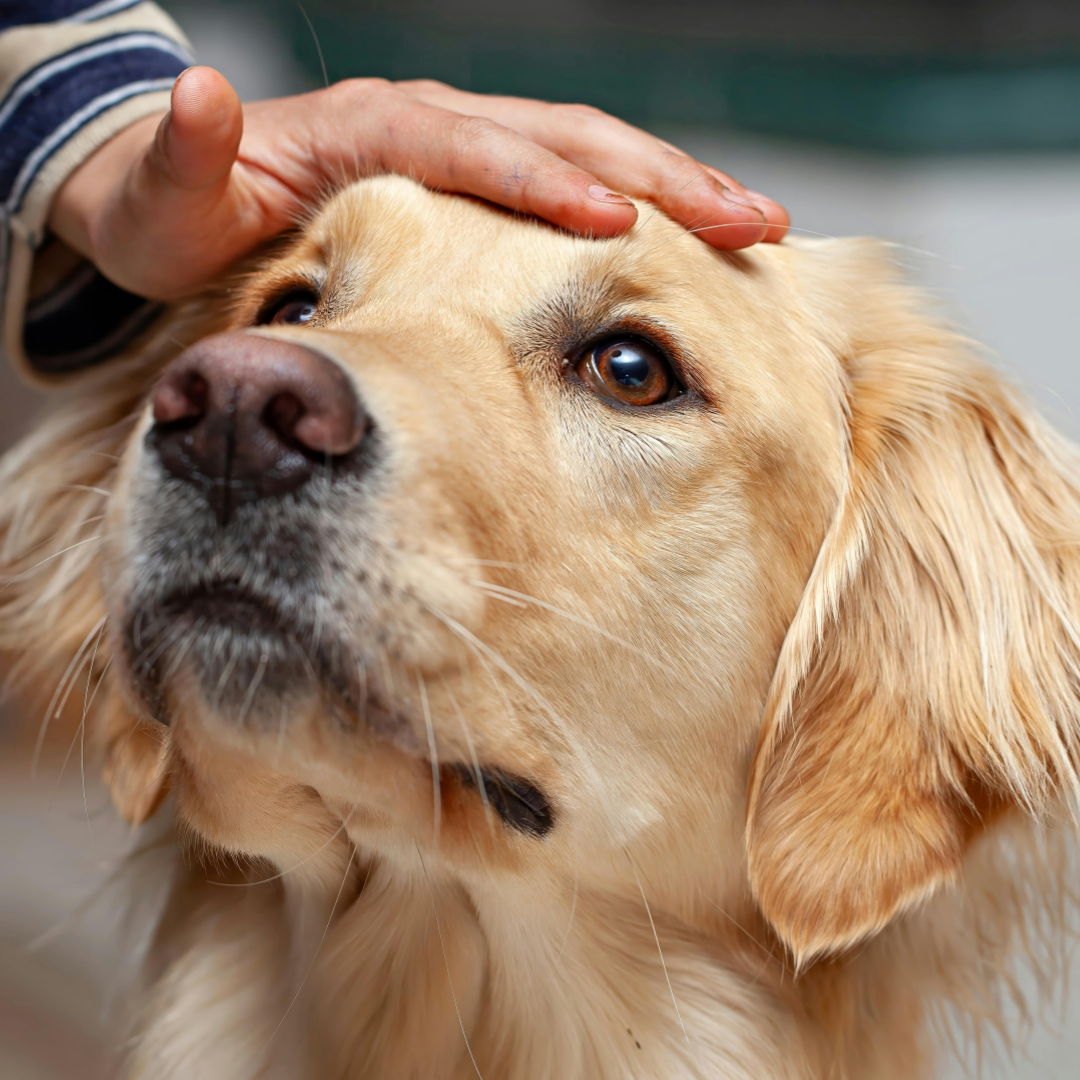
Some signs of storm anxiety are easy to recognize, including trembling, panting, pacing, hiding, and drooling. But dogs may communicate their discomfort in quieter ways, too.
Watch for behaviors such as frequent lip licking, sudden yawning, widened eyes, ears held back, or a tucked tail. Recognizing these early signals may allow you to help your dog settle before their anxiety becomes more severe.
As always, knowing your individual dog matters. A behavior that is normal for one dog may be a sign that something is wrong for another.
Creating a Calmer Space
While there is no single solution that works for every dog, a few simple changes may help make storms easier to manage.
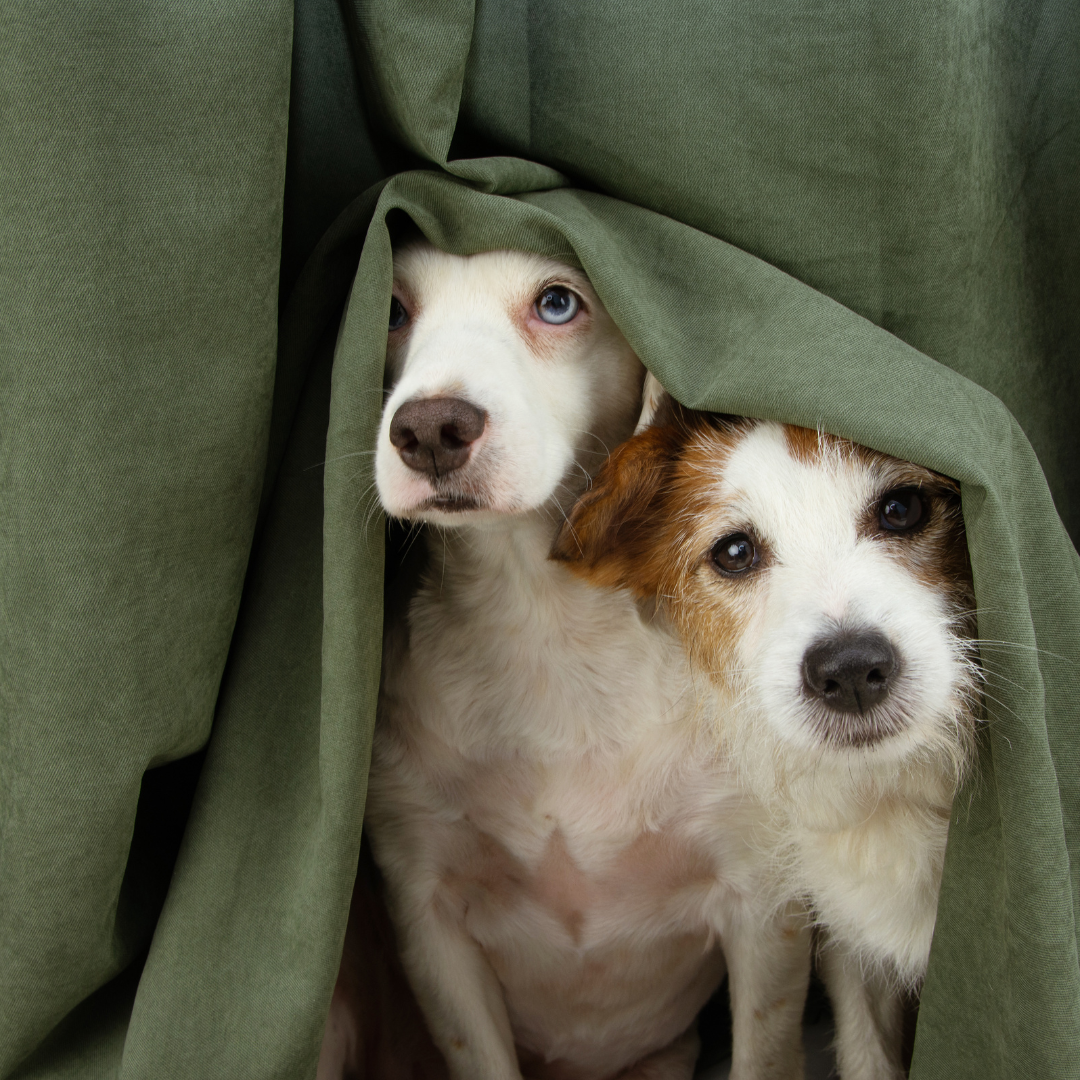
Give your dog access to a quiet, comfortable place where they already feel secure. A crate, closet, bathroom, or another cozy area may provide the den-like environment they are seeking. Add familiar bedding or toys, but allow your dog to choose where they want to settle rather than forcing them into a particular space.
Closing curtains or blinds can reduce flashes of lightning, while a television, fan, radio, or white noise machine may help soften the sound of thunder. Some dogs may also benefit from a favorite food puzzle, stuffed toy, or lick mat that gives them something calming to focus on. If you use peanut butter, always make sure it does not contain xylitol, which is toxic to dogs.
If storms are in the forecast, exercise or active play earlier in the day may also help your dog settle more easily later.
And if your dog comes looking for comfort, it is okay to provide it. Calmly sitting with them, speaking gently, or offering affection if they seek it will not reinforce their fear. Follow your dog’s lead. Some pets want to be close to their people, while others feel safer with a little space.
Know When to Talk With Your Veterinarian
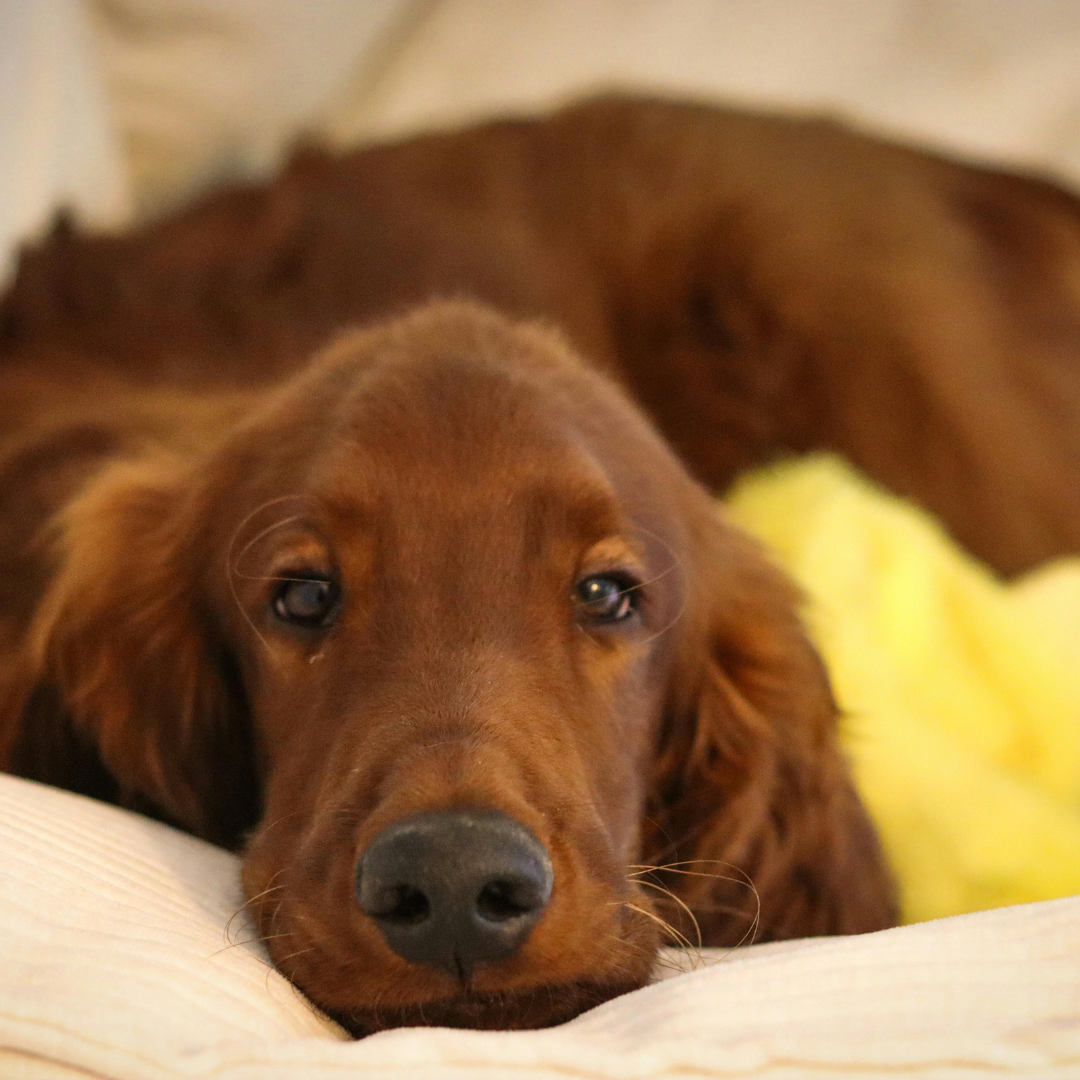
If your dog suddenly develops a fear of storms after previously being comfortable with them, it is worth mentioning the change to your veterinarian. New sensitivity can sometimes be associated with an underlying health concern.
You should also speak with your veterinarian if your dog’s anxiety is severe, continues despite changes at home, or leads to attempts to escape or injure themselves. Your veterinarian can help determine whether additional treatment or behavior-modification strategies may be appropriate.
We cannot make the thunder disappear, but understanding our dogs’ fears can help us respond with patience, preparation, and compassion.
Thank you again to Bark & Whiskers and Dr. Tracy Duffner for helping pet families better understand storm anxiety. We have shared some of the key takeaways here, but there is much more useful information in the full article. Visit Bark & Whiskers to read “Does Your Pet Panic During Storms?” and learn more.
